
AI SEO Automation Features: 9 Essential Benefits, Tools, and Strategies for Better Rankings
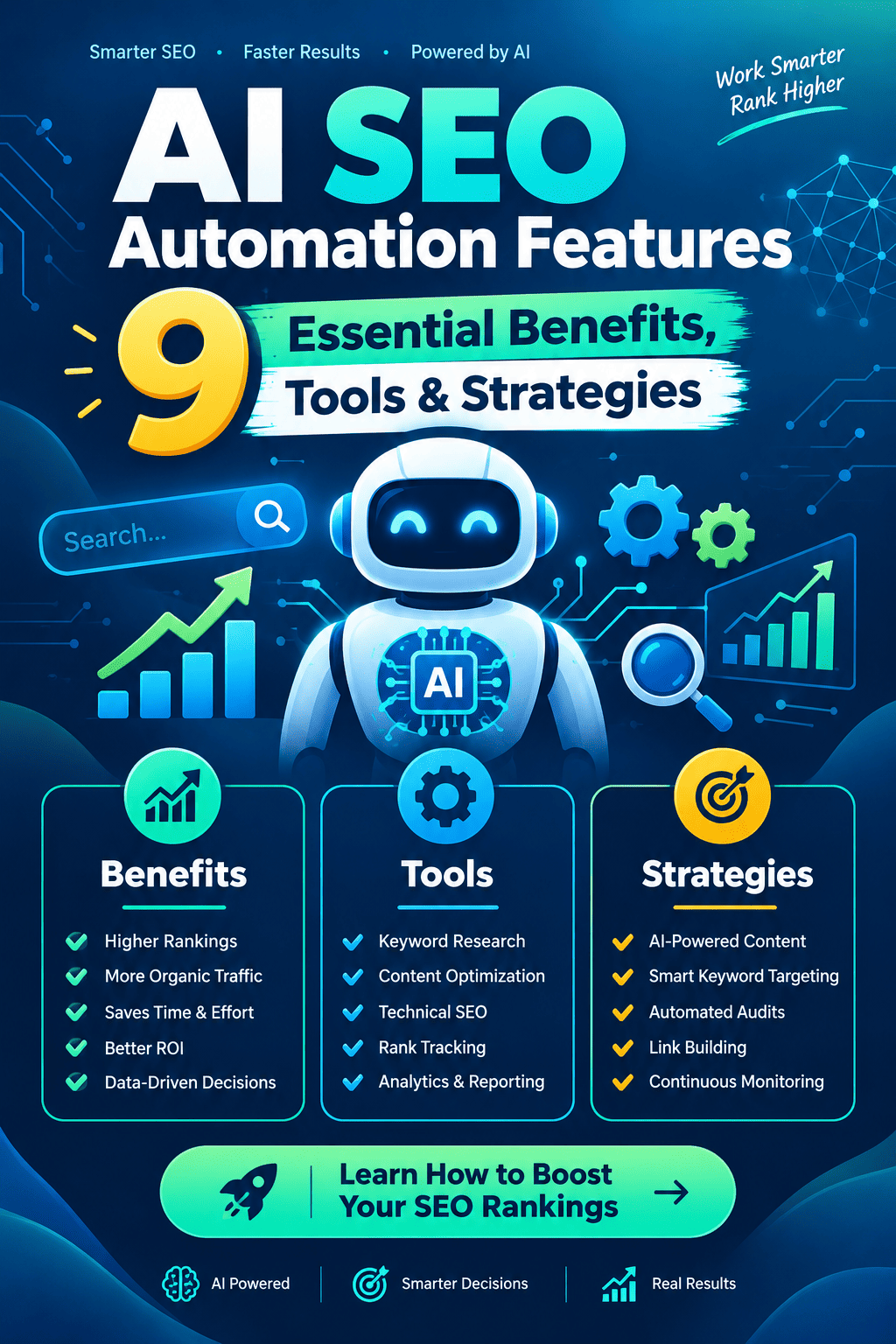
Search engine optimization (SEO) has become increasingly complex as search engines evolve, websites publish more content, and businesses compete for visibility across digital platforms. Managing keyword research, content optimization, technical audits, backlink analysis, and performance tracking manually can consume considerable time and resources. Artificial intelligence (AI) is changing this process by helping marketers analyze data, identify opportunities, automate repetitive tasks, and make more informed decisions.
Understanding ai seo automation features is essential for businesses, bloggers, digital marketers, and website owners who want to improve their search visibility without relying entirely on manual work. These features combine AI technologies, machine learning, natural language processing, and automated workflows to simplify important SEO activities.
AI-powered SEO systems can support everything from discovering relevant keywords to monitoring website performance. However, automation does not eliminate the need for human judgment. Successful SEO still requires useful content, technical accuracy, a positive user experience, and a clear understanding of the target audience.
This article explores the most important capabilities of AI-powered SEO automation, explains how they work, and discusses their practical benefits, limitations, and implementation strategies.
Read More: AI Automation Consulting: 9 Essential Benefits, Services, Strategies, and Business Applications
What Is AI SEO Automation?
AI SEO automation is the use of artificial intelligence and automated software to perform, simplify, or improve search engine optimization tasks. These systems analyze information from websites, search results, user behavior, and keyword databases to identify patterns and recommend actions.
Traditional SEO often involves manually collecting data, comparing competitors, checking web pages, and tracking rankings. AI-powered platforms can accelerate these activities by processing large amounts of information and identifying patterns that may be difficult to recognize manually.
For example, an AI-based tool may analyze a website’s existing content and identify pages that lack important subtopics, have weak title tags, or target overlapping search intents. An automation workflow can then organize these findings into a prioritized list of tasks.
The purpose of automation is not simply to produce more content or make more changes. It is to help website owners allocate resources efficiently and make decisions based on reliable evidence.
The most useful ai seo automation features support research, content quality, technical performance, reporting, and continuous improvement. Their effectiveness depends on the quality of the underlying data, the capabilities of the software, and the way users implement its recommendations.
1. Automated Keyword Research and Search Intent Analysis
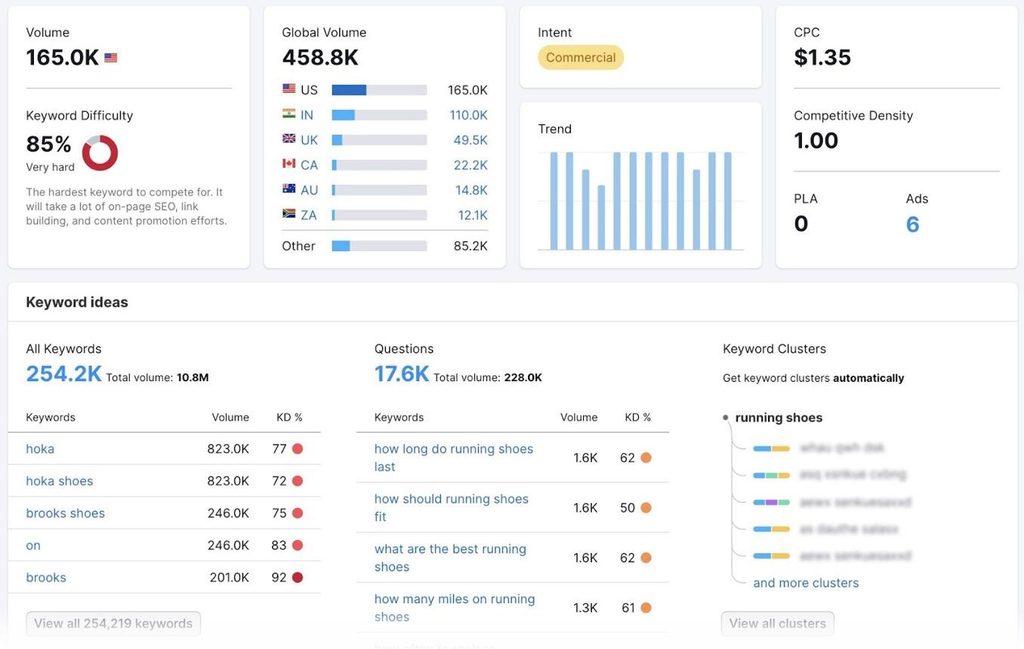
Keyword research is one of the foundations of SEO. It helps website owners understand what their audiences search for, which topics deserve attention, and how content can address specific needs.
AI-powered keyword research tools can analyze large keyword datasets and group related search terms according to their meaning, relevance, and likely intent.
Read More: Gridone AI Automation: A Complete Guide to Features, Benefits, Use Cases, and Future Potential
Discovering Relevant Keywords
Traditional keyword research often begins with a seed keyword. Marketers then use keyword databases to identify related phrases, search volumes, competition levels, and potential opportunities.
AI can make this process more efficient by identifying semantic variations, related questions, and broader topic relationships. Instead of examining each phrase independently, marketers can evaluate how keywords fit into a larger content strategy.
For example, a website about digital marketing might explore related terms such as SEO reporting, automated content optimization, technical SEO audits, and keyword clustering.
These suggestions help identify subjects that may be relevant to the target audience.
Read More: AI Automation Platform: 9 Essential Benefits, Features, Types & Applications
Understanding Search Intent
Search intent refers to the purpose behind a search query. Users may want to learn something, compare alternatives, visit a particular website, or purchase a product.
AI systems can classify keywords into common intent categories, helping marketers determine the most suitable content format.
An informational query may require a comprehensive article, while a transactional query may be better served by a product or service page.
Building Topic Clusters
Keyword clustering groups similar queries into related themes. This helps website owners plan content that covers a subject comprehensively without creating unnecessary duplicate pages.
The value of these ai seo automation features lies in their ability to reduce repetitive research and organize keyword opportunities into practical plans.
Nevertheless, keyword suggestions should be reviewed against actual search results, audience needs, and available search data. AI-generated estimates are not guaranteed to reflect real search demand.
Read More: AI Automation News: 11 Major Trends, Breakthroughs & Business Impacts in 2026
2. AI-Powered Content Optimization

High-quality content remains central to effective SEO. AI-powered optimization tools help writers identify missing information, improve structure, and align articles with the needs of their intended readers.
These systems can evaluate content against selected keywords, related topics, heading structures, readability guidelines, and competing pages.
Read More: AI Automation in Healthcare: 9 Essential Benefits, Applications, Challenges & Future Trends
Improving Content Structure
AI tools can recommend appropriate headings, identify sections that require more explanation, and suggest a logical order for presenting information.
For instance, an article about website security might need separate sections covering common threats, protective measures, monitoring practices, and recovery procedures.
A content optimization system can flag missing topics and help the writer create a more complete outline.
Identifying Content Gaps
Content gap analysis compares an existing page with relevant topics, user questions, or competing resources.
AI can help identify concepts that the current article does not address. Writers can then decide whether those topics would genuinely improve the reader’s understanding.
Not every suggested keyword or heading deserves inclusion. Adding irrelevant phrases simply to increase keyword coverage can make an article less useful.
Read More: AI Automation Solutions: 9 Essential Benefits, Types, Tools & Implementation Guide
Improving Readability
Some tools assess sentence length, paragraph structure, terminology, and reading difficulty. They may recommend shorter sentences, clearer transitions, or more direct explanations.
These recommendations are especially useful when technical subjects must be explained to beginners.
Preserving Originality and Accuracy
AI can assist with outlining, editing, summarizing research, and generating ideas. However, generated content may contain factual errors, repetitive language, or unsupported statements.
Human editors should verify claims, add relevant examples, check sources, and ensure that the final article provides genuine value.
Among the most practical ai seo automation features are those that help writers improve content quality without replacing editorial judgment.
Read More: Cybersecurity AI Automation 2026: 9 Essential Trends, Benefits, Risks & Complete Guide
3. Automated Technical SEO Audits
Technical SEO helps search engines discover, crawl, understand, and index website content. Problems in these areas can prevent valuable pages from appearing in search results.
AI-assisted auditing systems combine website crawling, rule-based checks, pattern recognition, and prioritization to help teams identify technical issues.
Detecting Crawlability and Indexing Problems
Search engines need access to important pages before those pages can be considered for indexing.
Technical auditing tools can identify issues involving robots directives, noindex tags, broken internal links, redirect chains, and inconsistent canonical tags.
Some platforms use historical crawl information and page-level patterns to help users investigate recurring problems.
However, an automated alert does not always mean that a page is incorrectly configured. For example, a noindex directive may be intentional for a private or duplicate page.
Read More: How Does AI Automation Work in Customer Support? 9 Essential Steps, Benefits, Tools & Complete Guide
Analyzing Site Architecture
A website’s structure influences how visitors and search engines navigate its content.
AI-assisted tools can help identify important pages that receive too few internal links, excessive click depth, or confusing navigation paths.
Improving these elements can make useful content easier to discover.
Monitoring Page Performance
Page speed, mobile usability, and interaction responsiveness affect the overall user experience. Tools can collect performance measurements and identify opportunities to reduce unnecessary scripts, optimize images, or improve caching.
The specific recommendations should be tested before implementation because technical changes can have unintended effects.
Prioritizing Issues
A large website may contain hundreds of technical warnings. Automated systems can help rank them according to severity, affected URLs, and potential business impact.
This prioritization makes technical SEO more manageable.
When implemented carefully, ai seo automation features can help technical teams detect problems earlier and spend less time reviewing repetitive audit reports.
4. Automated Competitor Analysis
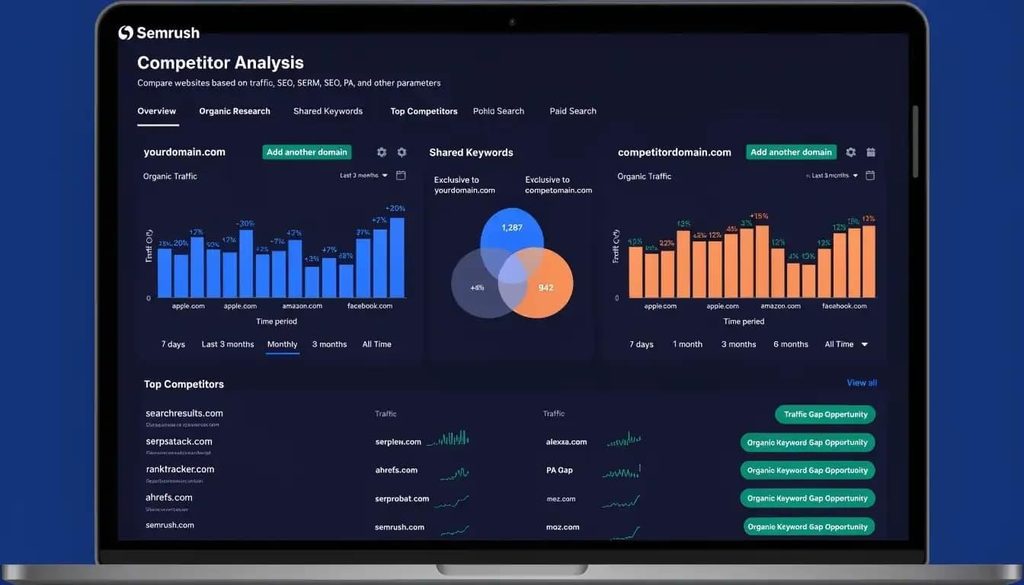
Competitor analysis helps businesses understand which websites compete for the same search queries and how their content strategies differ.
AI can accelerate this process by organizing competitor data, comparing page topics, and highlighting potential opportunities.
Read More: Best GTM Digital Agents in AI Sales Automation: 9 Leading Tools and a Complete Guide
Comparing Keyword Visibility
SEO platforms can compare the keywords for which different websites rank. AI-assisted analysis may identify queries where competing pages perform well but the target website has limited visibility.
These findings can inform content planning, although ranking differences alone do not explain why one page performs better than another.
Evaluating Content Coverage
Competitor analysis can reveal whether other websites answer important questions, provide detailed examples, publish original research, or organize information more effectively.
A marketer can use these observations to develop content that offers something distinctive rather than merely copying competing pages.
Read More: What Is AI Automation Software? 9 Essential Facts, Benefits, Types & Applications
Identifying Content Opportunities
Suppose several competing websites publish basic tutorials about email marketing, but few provide practical implementation examples or troubleshooting guidance.
A business could create a more useful resource by addressing those unmet needs.
AI can help discover such patterns, but the final decision should be based on audience relevance and business goals.
Tracking Changes Over Time
Automated monitoring can record changes in competitor rankings, newly published pages, and shifts in keyword coverage.
These insights help marketers respond to changing search conditions without conducting every comparison manually.
One of the most valuable ai seo automation features is the ability to turn large amounts of competitor information into an organized list of opportunities.
5. Automated On-Page SEO Recommendations
On-page SEO involves optimizing individual pages so that their content, structure, and metadata clearly communicate their purpose.
AI-assisted systems can review multiple page elements and recommend improvements based on the page’s topic, target audience, and search intent.
Optimizing Title Tags and Meta Descriptions
Title tags help communicate the subject of a page and can influence how users perceive a search result. Meta descriptions provide a summary that may appear beneath the title.
AI tools can generate alternative titles and descriptions, identify overly long text, and suggest more descriptive wording.
However, search engines may rewrite titles or choose different snippets. Neither a generated description nor a particular character count guarantees better rankings.
Improving Heading Hierarchy
Clear headings help readers navigate long articles and understand how information is organized.
Automated tools can detect missing headings, inconsistent hierarchy, or sections that do not clearly relate to the main topic.
Writers should use headings to improve comprehension rather than insert keywords into every heading.
Read More: What Is AI Automation? A Complete Guide to How It Works, Benefits, Types, and Applications
Recommending Internal Links
Internal links connect related pages on the same website. They help users discover additional resources and provide search engines with information about the relationships between pages.
AI systems can identify semantically related pages and suggest possible linking opportunities.
For example, an article about keyword research might link to a guide about content planning or SEO performance measurement.
Each suggested link should be checked for relevance, and its anchor text should accurately describe the destination.
Reviewing Image Optimization
Automated tools can identify images with missing alternative text, oversized files, or unsuitable formats.
AI may also suggest descriptive alt text, but the result should be checked against the actual image and its purpose. Decorative images generally do not need descriptive alt text.
These ai seo automation features are particularly useful for websites with large numbers of pages, where manually reviewing every element would require considerable effort.
Read More: Zapier Updates News: 5 Latest Features, Improvements, and What They Mean for Users
6. AI-Driven Rank Tracking and Performance Monitoring
SEO performance changes over time. Search algorithms evolve, competitors publish new content, and audience behavior shifts.
Automated monitoring tools help website owners measure these changes and identify pages that require attention.
Tracking Keyword Rankings
Rank tracking software records a website’s positions for selected search queries.
AI-assisted systems may identify unusual movements, group related ranking changes, and flag pages that have experienced substantial declines.
Rankings can vary by location, device, search features, and time. Therefore, individual ranking fluctuations should not automatically be treated as evidence of a major SEO problem.
Analyzing Organic Traffic
Analytics platforms measure visits from organic search and provide information about landing pages, user engagement, conversions, and other metrics.
AI can help identify relationships between changes in traffic and events such as content updates, website migrations, or technical problems.
Correlation does not establish causation, so these findings should be investigated before conclusions are drawn.
Read More: What Are the Best AI Workflow Automation Tools? Top Solutions for Smarter Business Processes
Detecting Performance Anomalies
An anomaly is a change that differs substantially from an expected pattern.
For example, an automated monitoring system might flag an unexpected decline in clicks to several important landing pages.
The SEO team can then examine indexing status, search impressions, ranking changes, seasonal demand, and recent website modifications.
Creating Automated Reports
Automated reports consolidate performance data into dashboards or scheduled summaries.
Teams can monitor impressions, clicks, click-through rates, conversions, and other relevant metrics without repeatedly collecting information from separate platforms.
The strongest ai seo automation features help users understand what changed, why it might have changed, and which actions deserve further investigation.
Read More: 7 Essential and Effective Insights on How Google Determines Search Relevance
7. Automated Backlink Analysis and Link Monitoring
Backlinks are links from other websites to a particular website. They can help search engines discover content and provide context about how resources are referenced across the web.
Backlink analysis tools collect information about referring domains, link attributes, anchor text, and changes in link profiles.
AI can help organize this information and identify patterns that merit closer inspection.
Discovering Potential Link Opportunities
AI-assisted tools can identify websites that publish content related to a business’s subject area.
For example, a company that creates educational resources might investigate relevant academic blogs, teacher communities, and educational publications.
These websites are potential outreach opportunities, not guaranteed sources of links.
Read More: What Is SEO Rank Tracking? A Complete Guide to Measuring Search Performance
Monitoring Lost and New Backlinks
Automated monitoring can notify website owners when valuable links disappear or new links appear.
A lost backlink may indicate that a page was removed, a website was redesigned, or a resource was replaced.
The appropriate response depends on the circumstances. Some lost links are insignificant, while others may justify contacting the referring website.
Evaluating Link Quality
AI can help identify unusual link patterns, irrelevant referring pages, and potentially manipulative practices.
However, automated scores should not be treated as definitive judgments of whether a backlink is harmful. A careful review of the linking page, context, and acquisition history is often necessary.
Supporting Ethical Link Building
AI can assist with prospect research, outreach planning, and identifying content that may attract references naturally.
It should not be used to generate mass spam messages or manufacture artificial link networks.
Effective link building depends on relevant resources, legitimate relationships, and editorial value.
In this area, ai seo automation features are most useful when they improve research and monitoring while leaving important decisions to experienced marketers.
Read More:Do Google Reviews Help SEO? A Clear, Practical Guide to Rankings and Trust
8. Automated Content Refreshing and Decay Detection
Publishing an article is not the end of the SEO process. Some pages gradually lose traffic because information becomes outdated, competing resources improve, or user expectations change.
Content refreshing involves reviewing existing pages and making updates that improve accuracy, usefulness, and relevance.
Identifying Declining Pages
AI-assisted analytics can help identify pages experiencing sustained declines in clicks, impressions, or rankings.
The system may compare historical performance and highlight content that deserves further investigation.
A decline does not always mean that the article is poor. Seasonal demand, search-result changes, algorithm updates, and reduced interest in a topic can also affect performance.
Finding Outdated Information
Content analysis tools can flag old dates, expired offers, discontinued products, broken references, and information that may require verification.
For example, a tutorial discussing software features should be reviewed when the product interface or functionality changes.
AI can identify possible issues, but it cannot guarantee that every statement is current or correct.
Improving Existing Articles
A content refresh may involve updating examples, correcting errors, improving explanations, adding relevant sections, or removing unnecessary material.
It may also involve revising titles, fixing broken links, and improving internal navigation.
The goal is to make the resource more helpful, not to change a publication date without meaningful improvements.
Prioritizing Updates
A website may contain thousands of articles, making it difficult to review every page at once.
AI can help prioritize updates based on traffic trends, business importance, information freshness, and the effort required.
These ai seo automation features help teams maintain content quality and allocate editorial resources more effectively.
9. Automated Reporting, Workflow Integration, and Predictive Insights

SEO work often involves several platforms, including website analytics, search performance tools, content management systems, keyword research software, and project management applications.
Automation can connect these systems and reduce the amount of manual coordination required.
Integrating SEO Tools
Workflow automation can transfer relevant data between connected platforms.
For example, a scheduled workflow might collect audit findings, create tasks for high-priority issues, and notify the responsible team.
The exact capabilities depend on the software, available integrations, and access permissions.
Generating Performance Summaries
AI can summarize large reports into concise explanations of major changes, emerging opportunities, and unresolved issues.
These summaries are useful for managers who need a clear overview without reviewing every metric individually.
However, generated summaries should be checked against the underlying data, especially when they inform important business decisions.
Forecasting Potential Trends
Some analytics systems use historical data and statistical models to estimate future traffic or identify possible changes in demand.
Such forecasts can support planning, but they remain uncertain.
Search algorithms, competitor activity, economic conditions, and changing audience interests can make future performance difficult to predict accurately.
Automating Task Management
Automation can assign tasks, track deadlines, and send alerts when issues remain unresolved.
For example, a workflow might notify a developer when a technical audit identifies a broken page template or notify an editor when an important article requires review.
The purpose is to make SEO operations more organized and consistent.
When reporting, integrations, and monitoring work together, ai seo automation features can provide a more complete view of SEO performance and reduce unnecessary administrative work.
Additional Benefits of AI SEO Automation
Beyond the nine major capabilities, AI-powered automation can provide several operational benefits.
Greater Efficiency
Automated systems can process large datasets, perform repeated checks, and organize findings more quickly than many manual workflows.
This allows SEO professionals to spend more time on strategic planning, content quality, and problem-solving.
Improved Consistency
Standardized workflows help teams apply the same review process across multiple pages and projects.
Consistency is particularly important for businesses that manage large websites or operate across several markets.
Better Scalability
A growing website creates more work for keyword research, technical auditing, content maintenance, and performance reporting.
Automation can help teams manage these activities as their websites expand, although human review requirements may also increase.
More Informed Decisions
AI-assisted analysis can bring together different types of data and highlight relationships that deserve investigation.
When combined with reliable measurements and expert interpretation, these insights can improve decision-making.
Reduced Repetitive Work
Tasks such as checking missing metadata, identifying broken links, compiling reports, and monitoring ranking changes can often be partially automated.
The amount of time saved depends on the size of the website, the tools used, and the complexity of the workflow.
Popular Tools That Support AI SEO Automation
Several established SEO platforms provide AI-assisted features, automation options, or integrations. Their capabilities differ, so businesses should evaluate them according to their requirements.
Semrush
Semrush offers keyword research, competitor analysis, site auditing, position tracking, and content-related tools. Some workflows include AI-assisted recommendations and reporting.
Best suited to: broad SEO research and monitoring.

Ahrefs
Ahrefs supports backlink research, keyword analysis, competitor discovery, and website auditing. Its data can help teams identify opportunities and monitor changes.
Best suited to: backlink analysis and competitive research.

Screaming Frog SEO Spider
This crawler helps users examine URLs, page titles, headings, directives, links, and other technical elements. Its automated checks can support large-scale technical audits.
Best suited to: technical SEO inspection and crawling.

Surfer
Surfer provides content research and optimization workflows that help writers assess topic coverage and organize on-page recommendations.
Best suited to: content planning and on-page optimization.
Google Search Console
Google Search Console provides first-party search performance and indexing information. Although it is not a complete AI SEO automation platform, its data is valuable for monitoring impressions, clicks, queries, and technical issues.
Best suited to: measuring Google Search performance.
Before choosing a platform, confirm its current features, pricing, usage limits, and integration options. Not every tool automates every SEO activity, and AI capabilities may differ by subscription.
How to Implement AI SEO Automation Effectively
Adopting automation requires more than purchasing software. Businesses should begin with clear objectives and introduce automated workflows gradually.
Step 1: Audit Your Existing SEO Process
Identify tasks that consume excessive time or frequently produce inconsistent results.
Common starting points include technical audits, keyword clustering, content gap analysis, and performance reporting.
Step 2: Define Measurable Goals
Choose objectives that reflect business needs.
Examples include reducing the time required to prepare reports, improving the accuracy of metadata reviews, identifying indexing problems more quickly, or increasing qualified organic traffic.
Avoid treating the number of automated tasks as the primary measure of success.
Step 3: Select Appropriate Tools
Compare platforms according to data quality, functionality, cost, usability, security, and integration options.
A small website may need only a few tools, while a large enterprise site may benefit from more sophisticated workflows.
Step 4: Establish Human Review
Decide which actions can be completed automatically and which require approval.
Routine reporting may need minimal intervention, while changes to canonical tags, robots directives, redirects, or important website templates should generally be reviewed and tested.
Step 5: Test Workflows on a Small Scale
Begin with a limited set of pages or a single SEO process.
Measure the results, check for errors, and refine the workflow before expanding it across the website.
Step 6: Monitor Results and Improve
Review performance regularly and update automation rules when requirements change.
Useful measures include time saved, errors detected, issue resolution time, organic search performance, and conversions.
A successful implementation treats automation as an ongoing process rather than a one-time installation.
Challenges and Limitations of AI SEO Automation
Despite its advantages, AI SEO automation has limitations that website owners should understand.
Inaccurate or Incomplete Data
AI recommendations depend on the information available to the system. Incomplete datasets, outdated information, and inaccurate estimates can produce misleading conclusions.
Whenever possible, compare recommendations with reliable first-party analytics and direct website checks.
Generic or Repetitive Content
AI-generated articles may repeat familiar explanations, overlook important context, or provide little original insight.
Publishing large quantities of similar pages can weaken the usefulness of a website. Content should be created to satisfy genuine audience needs rather than simply increase publication volume.
Risky Technical Changes
Automated edits can create problems if applied without appropriate safeguards.
Changing canonical tags, redirect rules, indexation directives, or internal links at scale may affect important pages. Test changes and maintain a recovery plan.
Limited Understanding of Business Context
An AI system may identify a keyword opportunity without understanding whether it attracts the right audience or supports the company’s goals.
Human expertise remains essential for evaluating relevance, profitability, brand positioning, and customer needs.
Privacy and Security Concerns
Some automation platforms process website data, customer information, or business documents.
Organizations should review data-handling policies, access permissions, retention practices, and applicable privacy requirements before connecting systems.
The best approach combines automated analysis with human oversight, reliable data, and careful implementation.
Best Practices for Using AI SEO Automation
To achieve sustainable results, follow these practical guidelines:
- Prioritize helpful content. Create resources that answer real questions and provide accurate, meaningful information.
- Verify AI-generated recommendations. Check facts, keyword suggestions, and technical findings before acting on them.
- Avoid keyword stuffing. Use target phrases naturally and focus on relevance rather than repetition.
- Protect website integrity. Require appropriate approval for high-impact technical changes.
- Use reliable performance data. Compare AI insights with analytics, search performance reports, and direct website observations.
- Monitor important pages. Review high-value landing pages, conversion paths, and content that requires frequent updates.
- Measure business outcomes. Evaluate qualified traffic, leads, sales, and other relevant goals instead of focusing exclusively on rankings.
- Maintain editorial standards. Ensure that published content is accurate, original, clear, and appropriate for the intended audience.
- Review workflows regularly. Update automation rules as the website, tools, and business priorities evolve.
These practices help ensure that automation supports a sustainable SEO strategy instead of creating additional problems.
The Future of AI SEO Automation
AI is likely to become increasingly integrated into keyword research, content analysis, technical monitoring, and performance reporting.
More sophisticated systems may help teams coordinate tasks across several platforms, identify emerging search patterns, and detect technical issues before they affect large numbers of pages.
Search behavior is also evolving. Users may discover information through traditional search results, AI-generated summaries, conversational search experiences, and other digital interfaces.
Businesses should therefore focus on creating trustworthy resources that clearly answer questions, demonstrate relevant expertise, and provide information that readers can use.
Structured data, accessible page design, accurate business information, and clear content organization can support discoverability, although no individual technique guarantees inclusion in AI-generated answers.
The future of ai seo automation features will likely involve greater integration between data analysis, workflow management, and human decision-making. Businesses that combine these capabilities with strong editorial and technical standards will be better prepared to adapt to changes in search.
Frequently Asked Questions (FAQ)
1. What are AI SEO automation features?
AI SEO automation features are capabilities that use artificial intelligence and automated workflows to simplify SEO tasks. They may include keyword research, content optimization, technical auditing, competitor analysis, rank tracking, backlink monitoring, and automated reporting.
2. How do AI SEO automation tools work?
These tools process information from websites, keyword databases, analytics platforms, and other sources. Depending on their design, they use machine learning, natural language processing, statistical analysis, or predefined rules to identify patterns and recommend actions.
3. Can AI SEO automation improve Google rankings?
AI automation can help improve SEO processes by identifying technical problems, supporting content improvements, and revealing keyword opportunities. However, it cannot guarantee higher rankings. Results depend on content quality, competition, website performance, search intent, and many other factors.
4. Is AI SEO automation suitable for small businesses?
Yes. Small businesses can use automation to reduce repetitive work, identify relevant keywords, monitor website performance, and maintain important pages. They should choose tools that match their budget, website size, and available technical expertise.
5. Can AI automate SEO completely?
No. Many repetitive tasks can be automated, but SEO still requires human judgment. Content accuracy, strategic decisions, brand positioning, technical changes, and the interpretation of unexpected performance changes often require expert review.
6. Which AI SEO automation features should beginners use first?
Beginners can start with keyword research, content optimization recommendations, basic technical audits, and performance monitoring. These activities provide a practical introduction to automation without requiring complex integrations.
7. Does AI-generated content hurt SEO?
AI-generated content is not automatically harmful to SEO. Its value depends on quality, accuracy, originality, and usefulness. Content created primarily to manipulate search rankings, particularly when it offers little value to readers, can violate search engine spam policies regardless of how it was produced.
8. How much do AI SEO automation tools cost?
Costs vary considerably. Some platforms provide free features, while paid subscriptions may charge monthly or annually according to functionality, data limits, and website requirements. Businesses should compare the total cost with the time saved and the value of the insights provided.
9. How can businesses measure the success of AI SEO automation?
Businesses can measure success through time saved, fewer operational errors, faster issue resolution, improved content quality, organic search clicks, qualified leads, and conversions. The most appropriate metrics depend on the website’s objectives.
Conclusion
AI is making SEO research, monitoring, and optimization more efficient by helping businesses process information and automate repetitive activities. From keyword discovery and content analysis to technical auditing, backlink monitoring, and reporting, these capabilities can support more organized and data-informed SEO strategies.
Understanding ai seo automation features helps website owners choose the right tools, prioritize valuable tasks, and develop workflows that support their long-term goals.
However, automation should complement rather than replace human expertise. Accurate information, original content, technical reliability, ethical practices, and a positive user experience remain essential to sustainable search visibility.
Businesses that combine intelligent automation with careful review and continuous improvement can spend less time on repetitive work and more time creating useful resources for their audiences.